

Bach + Lady Gaga² ... Bach + Beatles ... Bach + Eminem ... Bach + Dusty Springfield..
Bach and Lady Gaga … that makes sense. But what does “Bach and Lady Gaga²” mean? Well, in its very nature, the headline fits perfectly with this Bach portal. And even more so with the author of this website: the joker of the musical family, the spokesperson for this small clan, the prankster from the wine-growing village of Flein near Heilbronn, north of Stuttgart, Germany. The answer? There’s actually been a reference to this “Bach and Gaga” super combo since 2018. Specifically, on this website: it’s Bach FAQ 112..
In this FAQ 112, I raise the provocative question of whether Gaga – sorry, Lady Gaga – “stole” from Johann Sebastian Bach when she performed “Bad Romance.” Read on below. You don’t know who Lady Gaga is? I can help you with that. Because there’s a lot, a lot of information on Wikipedia. Even for those who don’t just know Lady Gaga, but actually love her..
But it's going to get really complicated..

Superstar Lady Gaga. Did she just rip off Johann Sebastian Bach, making “Bad Romance” partly Bach’s work? Well, to a tiny extent, it is actually Bach’s work. But only to a very tiny extent. As for ripping it off … no, Gaga didn’t do that. She was inspired, this lady. Good job. © Info..
And now, for all those who don’t really like reading captions – including the one above – Lady Gaga didn’t steal from Johann Sebastian Bach. She drew inspiration from the master. And maybe, just maybe, “Bad Romance” could have been called “Lady Gaga feat. Johann Sebastian Bach”. But … on the other hand … that might have been really uncool for a lot of kids and young people. So she didn’t “steal” the part in her song that Bach invented some 300 years – give or take – before her time. By the way, there’s some really cool information on Wikipedia about this very Lady Gaga song, Bad Romance. And it’s possible that this very Wikipedia entry inspired what has now become a full page on my website, under Bach on Bach: Please don’t take it quite so seriously. And the text continues below the ad..
Advertisement
20 Bach Calendars..
The first of the three most recent Bach calendars. Be sure to take a look at the monthly pages. Click on the link two images below..
And while you're in the shop, also take a look at the twelve months of this calendar..
The third in the series ... among the Publisher's latest Bach calendars. Click here to view the monthly pages mentioned above..
End of Advertisement

That must be a huge relief for Gaga fans. All is well. Gaga + Bach = Dream Team. Two top musicians collaborating on a song ... that already worked out well with the “Ave Maria” a few years ago, with Mr. Gounod. © Info..
So let's be clear: Why is the information about Lady Gaga here again? It already exists as FAQ 112. Simply because it belongs here as well ... in addition. And because there's even more on this topic here. Also, originally, because I wanted to “accommodate” you: specifically on Google, during your search..
And it was only to be expected that, on this topic, you would be looking for a recent composition by a contemporary musician that incorporates elements from the Baroque master to Lady Gaga. On this page, I’ll also introduce you to other musicians, bands, and orchestras who have “borrowed, copied, or adapted” from Bach. Or who were simply inspired by him. That … or performing his works: It … isn’t quite the same thing..
And you found your way here “via Gaga.” Or via FAQ 112. So now you’re getting everything in a nutshell … so to speak. By the way, that cool lady from America “drew inspiration” from the “Fugue in B minor from The Well-Tempered Clavier, Book 2” (… BWV 869). Did she? Really?..
That's exactly how I intended my text about Lady Gaga's work in her song “Bad Romance” featuring Johann Sebastian Bach to be. In the spring of 2019. But then everything changed..
Bach & Gaga ... How It All Began..
The entire story is actually even more exciting. Of course … only for those who prefer to read more. For those who are interested. And for those who want to take the time to explore an exciting but insignificant development in my Bach project..
Sometime in 2018, I came across credible references online suggesting that Johann Sebastian Bach may have inspired Lady Gaga to create a musical sequence in her song “Bad Romance.” I’m a big fan of Gaga myself, and I especially love this particular song of hers..
After conducting a reasonable amount of research, the background information for FAQ 112 at that time was compiled in 2018..
In 2019, about a year later, I met Reinhold from Cologne. He had a question. And he sent me a message via the “Bach on Bach” form. It was about “Bach plus Dusty Springfield”. Through the Bach House in Eisenach, I was able to answer Reinhold’s question, and Reinhold then provided me with 1. his collection of artists inspired by Bach and their works. And 2. the list of artists who actually performed Bach’s pieces in their own works. Two distinctly different disciplines..
Reinhold collected for 50 years. As I went through his roughly 25 emails to me and what felt like hundreds of listed musicians, I remembered my discovery of “Bad Romance” and realized: Lady Gaga isn’t in Reinhold’s collection! Why not? After all, Reinhold is the world’s leading expert in this field..
I went online – once again – to look for further confirmation of the claim that a short passage from Lady Gaga had been incorporated into her song “Bad Romance.” And I found … ..
… nothing really meaningful! Only my FAQ 112 was at the top of Google’s search results. But I noticed that there are pieces inspired by Bad Romance and then performed in the style of Johann Sebastian Bach. Maybe I’d watched and listened to the video “Fugue on a Theme by Lady Gaga” (… on YouTube). And I’d mistaken it for the original Fugue in B minor from The Well-Tempered Clavier, Book 1, BWV No. 869. But then what I was hearing would actually be very similar to the song Bad Romance. Now you can briefly listen to both one after the other: Here is the original by Lady Gaga. Of course, it’s a bit tricky that the prelude – which can be described as Bach’s work – can only be heard in the video version, but not in the audio version..
It’s possible that in the summer of 2018, the article from neues-deutschland.de was also at the very top of Google’s search results, and I overlooked the fact that it was a question, not a statement. I may also have picked up on this detail from the “Bad Romance” Wiki. I overlooked the fact that while Wiki entries are great, you should always look for another source. And there were other clues as well – for example, questions in forums – that prompted me to share the similarity mentioned above as a cool fact..
So in the spring of 2019, I repeated my research and, at that point, could no longer find any similarity between the aforementioned BWV 869 and Bad Romance. And there was a reason for that: not because the similarity wasn’t there, but because my ears aren’t as trained as those of Bach connoisseurs. Moreover, my knowledge of Bach’s music wasn’t (...yet) sufficiently developed..
So “we had to turn to the experts”: And at first – once again – those were the ladies and gentlemen at the Bachhaus in Eisenach. And there was also my “new,” highly qualified “Reinhold source”. The reply from the Bachhaus in Eisenach arrived – as always – in a flash and read as follows:..
-------------------------------
Dear Mr. Bach:..
What a great discovery. Of course, I know that Lady Gaga song, but I never made the connection to JSB..
I, too, can only recognize the beginning – the first 12 seconds – with the synthetic keyboard sounding like Bach (played at high speed, perhaps using the Capella program or something similar). And, as you wrote, it is the Fugue in B minor, WTK I, BWV 869..
Have a great holiday tomorrow and...
Warm regards
Your Bachhaus Team..
-------------------------------
And Reinhold got right to the point as well:..
Reinhold from Cologne has once again produced something incredible with his research (… just wait until we get to his life’s work later on this, my website page). Quality plus quantity ... a double whammy … when do you ever get a combination like that?!..
He – and on this page he is not “just any Bach fan”, but, in my opinion, the leading authority on the planet … so he wrote in an email to me … incidentally, his final one, which was actually the last to answer my question – the one I needed for the Lady Gaga section … that while he is familiar with the title, as a music listener, he “only sort of” recognizes a Classical Connection, but wouldn’t associate it with any of the masters of Classical Music. But … he questioned his own incredible potential and knowledge (… my words, as the author of this site) and brought up his “non-existent perfect pitch.”..
Starting at the 30-second mark – which is what my question referred to – he thought he heard “Rasputin” by German disco band “Boney M.”, produced by Frank Farian in 1987 … and I hummed quietly to myself and agreed with him. Several statements on relevant websites on the topic immediately confirmed that his assessment was correct. Reinhold did some further research on this … for me and for my readers … that is, for you:..
The Classic FM portal (... the first video isn't available there, but I'll include it later in this section) seems to offer the solution. Specifically, in the “Discover Music” and “Humor” sections. Without a good translation, it’s hard to really make sense of it, but Gaga must have known that she “copied = borrowed = drew inspiration from.” Please translate this yourself – and do so carefully – because we’re taking an almost “scientific” approach here, so a “roughly accurate translation” won’t suffice. What’s exciting right now: As the author of this page, I believed that Reinhold “stumbled upon” this very spot – just as I did – in exactly the same way. Whether that’s true … well, you’ll only find out by reading on carefully. So here is this successful work (... once again on this, my page)..
But the internet offers more: AKQA. Sylvie Vandenbroucke posted about our challenge. And Reinhold noted that the German Wikipedia article on “Bad Romance” makes no mention of Johann Sebastian Bach, whereas the French and Italian Wikipedia articles do..
And it gets even more exciting, much more exciting: Reinhold found a discussion forum dedicated to our exact “problem”: Talk Classical confirms that Bach’s fugue can be heard, and there’s a note indicating that this specific Bach piece is the only one played on the synthesizer in the video..
In summary, Reinhold suggested that “… there might actually be a few seconds at the beginning from Bach’s Fugue in B minor from *The Well-Tempered Clavier*, Book 1 (… freely quoted by me),” and then – quoting him exactly – Reinhold wrote: “So, actually, it’s pretty clear, and therefore a lot of fuss over nothing!!” Cool, spot-on, what a great investigation, top-notch (... author’s note ... well ... from me)! Thanks, Reinhold from Cologne!..
So What, Then, Is the Conclusion (... That Is, My Opinion as the Author of “Bach on Bach”)?..
Returning once more to the original question, as well as to Lady Gaga and my opinion as the author of this small Bach research project: She didn’t steal anything … but something unique in music history happened, and it has now been discovered and preserved for anyone interested:..
For me ... there’s practically nothing in Bad Romance right now that sounds like what Bach once composed. Not when I listen to Bad Romance and Opus 869 on the radio. It’s that quick, that simple. For Bach fans, for people with a better ear for music, and for others, it may be different. Fair enough. But what, then, is so unique in the history of music and the history of composition?..
This results in a “cross-genre ping-pong” in music..
The Only Cross-Genre Ping-Pong in the History of Human Music..
Somehow, though, the intro to Lady Gaga’s song in the music video must have reminded one or another musician of Bach’s fugue, inspiring them to ultimately rework this song, Bad Romance, into a kind of fugue. In other words, Bach inspired Gaga, and Classical Music became pop. And this pop piece, in turn, inspired others to create yet another, completely different work – this time, a Classical one. You don’t see that happening with modern works that were – for example – inspired by Mozart and then made the leap back from pop song to Classical Music. And the same goes for Beethoven’s music. We probably don’t even need to mention the other masters of the Classical Tradition in this context..
If you're still reading this – I'm delighted – then there are now several absolutely cool pieces to check out. First up, the “Facebook Addiction Recovery Institute Symphony” presents a piece by Giovanni Dettori: “Lady Gaga Fugue (... Fugue on a Theme by Lady Gaga)”..
Next: Five young musicians present a really cool short Classical Arrangement—a mix of Gaga and Bach: Oblivion Mash Up performs “Lady Gaga vs. J.S. Bach”..
Another exciting version is the one by the band “Canadian Brass”: Bad Romance (... Brass Romance). It should be noted, however, that this version might appeal more to Bach fans who think Lady Gaga is cool “even without Bach,” since Canadian Brass incorporates less of Bach’s music than the musicians did before them..
Finally, there’s also a harpsichord version of “Bad Romance”, and at least the video on YouTube shows the connection to the Thuringian. And it certainly sounds Classical. Martin Larsson performs this version. Thank you..
So, maybe let's start all over again:..
Reinhold's Got a Question: A Bach Expert (... Him) Asks the Bach Beginner (... Me)..
First of all: This page of my website still doesn’t get right to the point. It’s intended for Bach connoisseurs in a very specific field. And since there aren’t really that many Bach fans in the world, it’s basically meant for only a very small number of people. Those who love Bach’s music, are also interested in him as a person, and are, on top of that, fascinated by small, intriguing trivia. Reinhold from Cologne has collected them for us over many years..

Cologne on the Rhine. This is where Reinhold lives. This is where Reinhold collected. From here, Reinhold has provided "Bach on Bach" with a true treasure: musicians who have drawn inspiration from Bach. Wow. “Bach on Bach” says ... Thank you. © Pixabay..

Here's another cool photo of the Rhine and Cologne, this time just before nightfall. © Pixabay..
Back to the headline: No, I didn’t mix it up, nor did I make a typo… and the grammar is correct, too. Is it? Reinhold from Cologne is the ultimate Bach fan in this discipline … at the very least. As the author of this site, I “merely” find Bach-related topics, rewrite them in plain English, organize them, and make them enjoyable, engaging, entertaining, and worth reading … and then forget about the content again. I am not the Bach specialist on this team … Reinhold is one of them. Once again … thank you, Reinhold! And here, then, is the story of how it all unfolded. The actual “Bach treats” follow two or three paragraphs later..

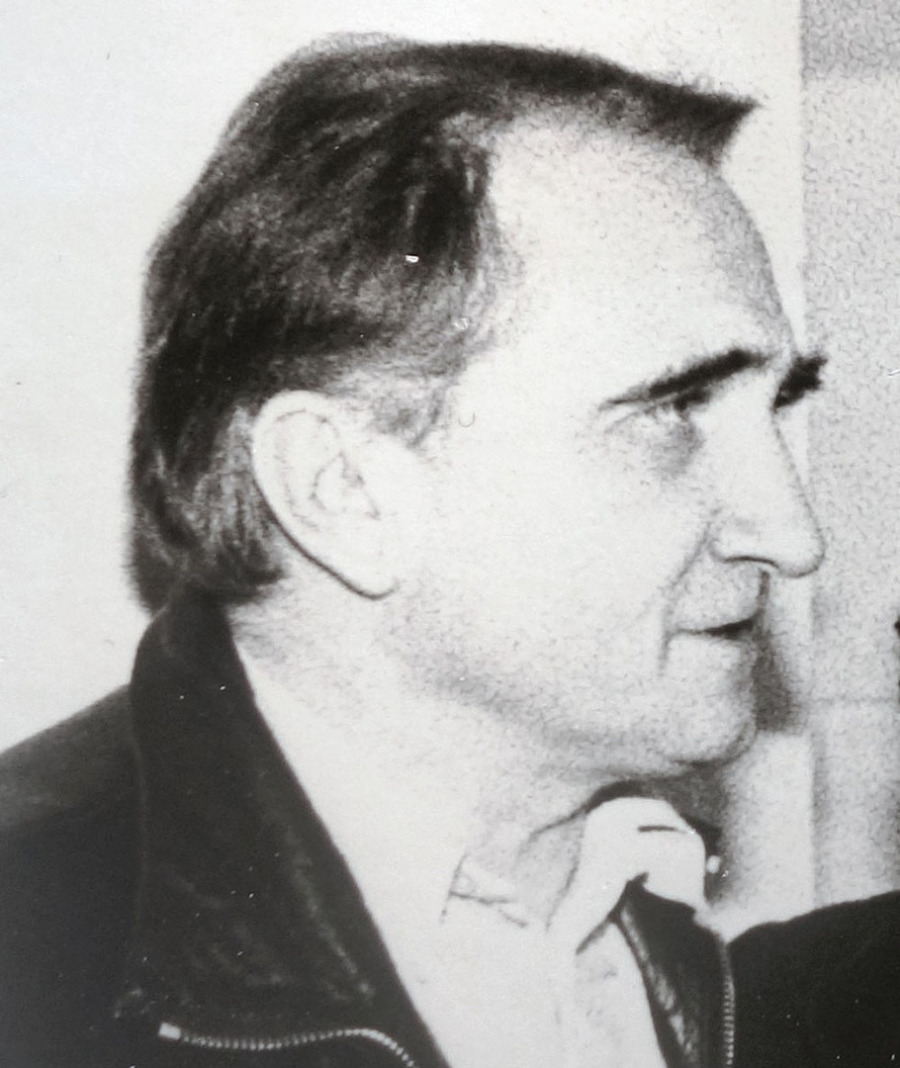
The “Bach on Bach” author a few decades ago ... ..

... and the “Bach on Bach” author at “work,” later ... ..

... finally, it is the “Bach on Bach” author with his wife Renate (... in the middle) and his big sister, Petra-Ines Kaune. © Gerhard Kaune..
In a nutshell: Bach vs. Dusty Springfield, Bach vs. the Beatles, Bach vs. Lady Gaga, Bach vs. Eminem, and Bach vs. James Last ... and many more.
It was spring in the wine-growing region around Flein. Flein near Heilbronn, north of Stuttgart. In Southern Germany. And, as happens from time to time, a Bach fan got in touch via the contact form on Bach on Bach. It was Reinhold from Cologne. And he had a request, or rather, a question..

Cologne again ... that's where Bach expert Reinhold lives. With his question. © Pixabay..
Reinhold wrote:..
Maybe you can help me!?!..
Recently, late one evening, I heard the song “Go My Love” by Dusty Springfield on “WDR 4.” I had never heard this piece before, so I did some research and found a reference suggesting that the song is actually a composition by the great Johann Sebastian Bach. It was recorded in 1970 but wasn’t finally released until 24 years later ... in 1994. With lyrics by musician Norma Tanega. Unfortunately, my search for more information was unsuccessful..
Here's what I found out: There's a French version of “Frida Boccare” titled “Cent Mille Chansons.” It was released in 1968, two years before the version featuring Dusty Springfield was produced..
On Wikipedia – as always – I did manage to make some real progress, though, because it mentions that the composer Michel Magne was inspired by Johann Sebastian Bach. Does the melody I’m sharing with you here – in two of the three variations described above – sound familiar to you?..
You Can Find Answers About Bach, for Example, in the Bach House in Eisenach..
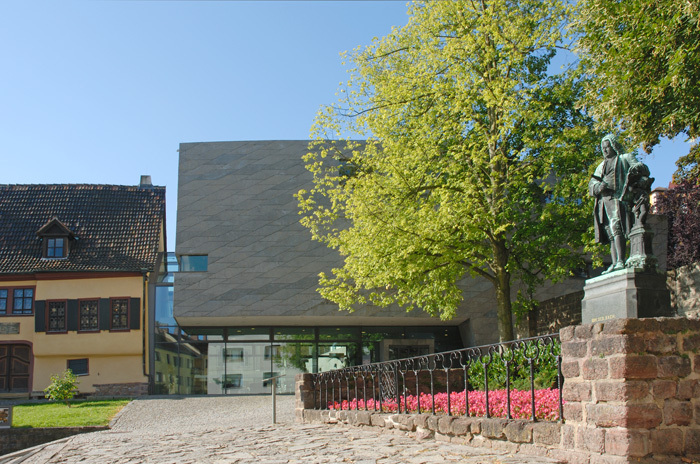
You’ll always find help here. Seriously: In Eisenach, at the Bachhaus (... Bach House), they always have an answer. Either directly, quickly, and to the point. Or, if your question about Bach is too specific, the Bachhaus is sure to have a contact who can point you in the right direction..
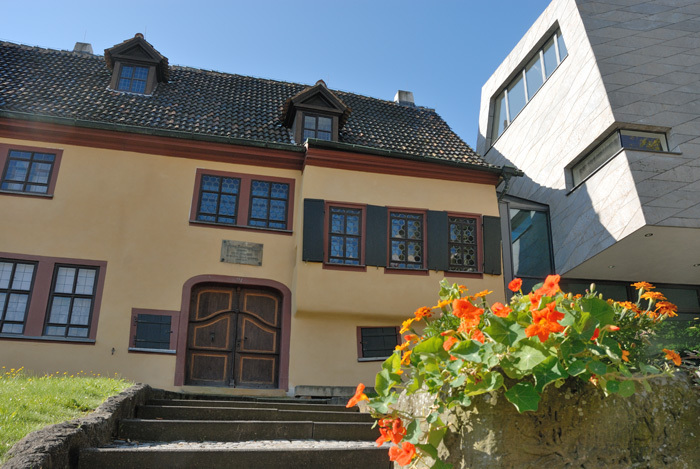
Once again, the Bach House (... Bachhaus) on Frauenplan in Eisenach ... because it's definitely worth a visit..
So, obviously, as the author of this – my – website, I’m not just overwhelmed by such a tricky question. I’m completely overwhelmed, so I follow my own advice and turn to the staff at the Bachhaus (... Bach House). Yes, there are quite a few of them, and they’re all nice and cool..
One of them even replies right away..
-------------------------------
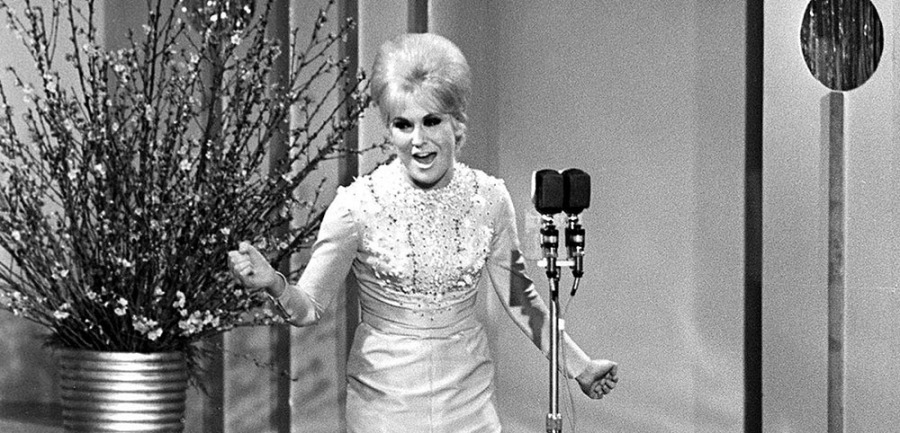
Dusty Springfield (... you can listen to it here) performed a segment of Johann Sebastian Bach’s music. © Info..
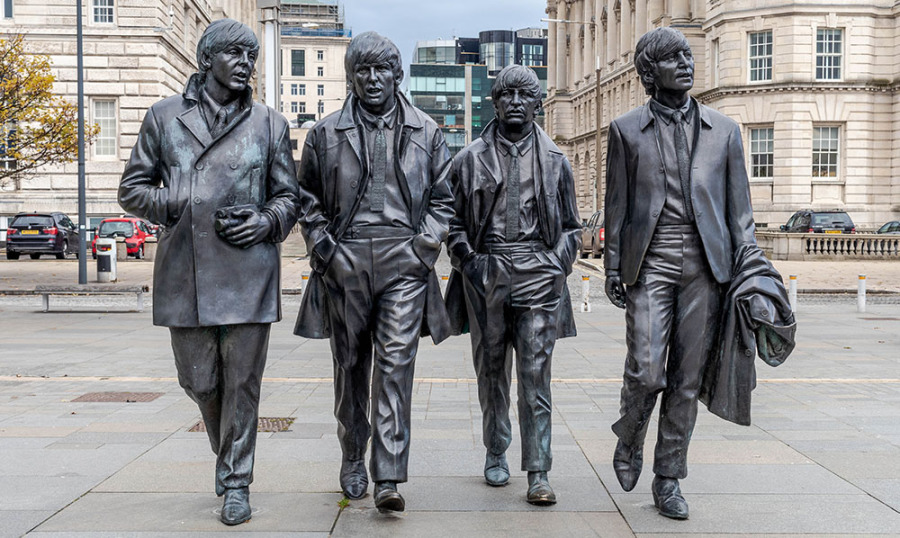
Bach and the Beatles: Of course, they were familiar with the music of the super composer. A famous example of the Beatles’ inspiration from Johann Sebastian Bach can be found in their song Blackbird on the album “The Beatles” (... also known as “The White Album”). Paul McCartney explained that the guitar style in “Blackbird” was heavily inspired by Bach’s Bourrée in E minor from the Lute Suite BWV 996. © Pixabay..
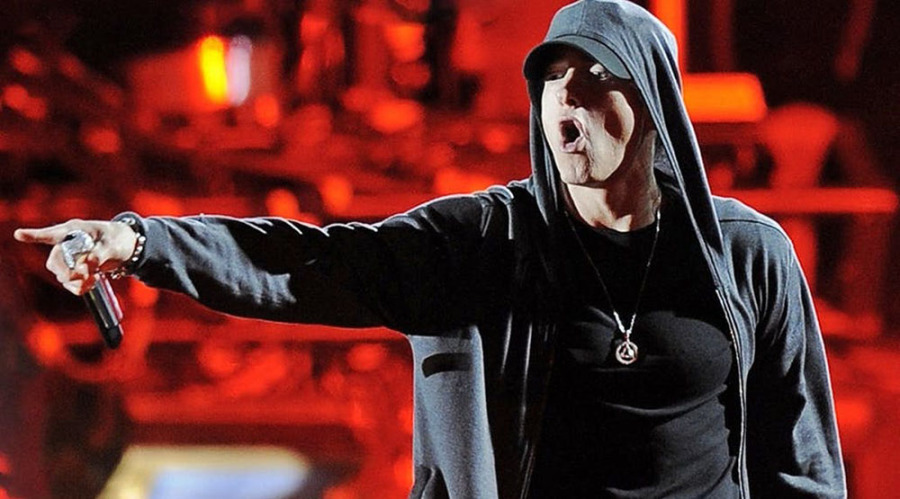
Eminem thinks at least one of Bach's works is cool. And he incorporates it into one of his songs: Brainless is the name of the piece. © Info..

Feel My Rhythm. Bach and Red Velvet: A South Korean girl group composed a cool piece based on “Air on the G-String.” © Info.

Advertisement
"Bach 4 You" ... You'll Find More Bach Busts and Bach Figures Probably Nowhere..

We found the five Bach busts with the most exciting facial expressions, two Bach statues, two Bach tin figures and two little Bach men from the Ore Mountains. Click here to discover all of them..
20 Bach calendars, 20 composers calendars, 20 music calendars. Three sizes. This year, next year. In two calendar styles. To the shop..
End of Advertisement
He Pioneered This “Genre.” And Then There’s This “Latecomer”: Charles Gounod and Procol Harum Featuring Johann Sebastian Bach
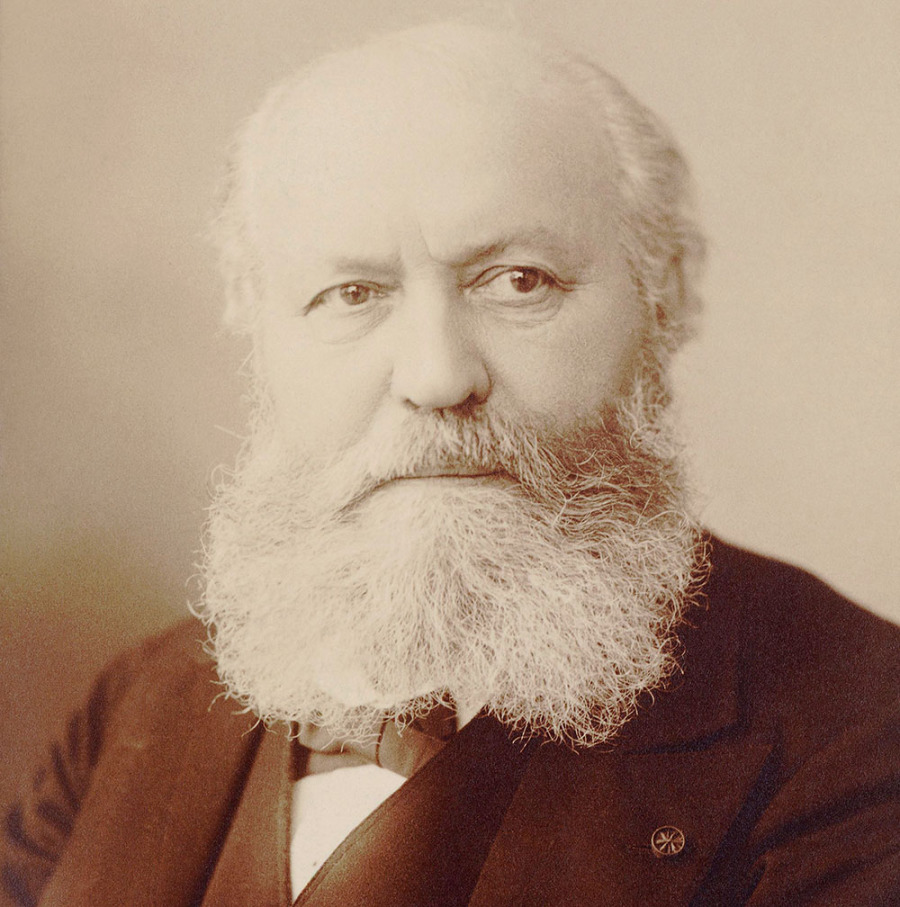
That's right, he came up with it: As early as 1859, Charles Gounod was already fascinated by one particular work by Bach..
Charles Gounod composed his famous “Ave Maria” in 1859. The piece is based on Prelude No. 1 from Johann Sebastian Bach’s *The Well-Tempered Clavier*, Book 1 (... BWV 846), to which Gounod added his own melody. The work is also a successful example of the fusion of two stylistic eras: Bach’s Baroque harmonies meet Gounod’s Romantic melodies. It quickly became popular and remains to this day one of the best-known musical settings of the Ave Maria text, as well as undoubtedly the most famous collaboration between two composers of Classical Music.
Attention, Bach Enthusiasts...
Do not watch the following video. It is intended exclusively for “complete beginners to Bach.”
I, too, was a beginner who started from scratch and, for a long time, didn’t know how to explain what Bach’s “Ave Maria” actually is. That is, until the day we “got lost” in the Paris Metro. We got lost on our way to the Place du Tétre to have a caricature of Bach drawn..
Down below, in the Metro, in one of the tunnels, we heard the Ave Maria, very close by. We followed the melody and discovered an “artist” who was “performing” there for everyone waiting and arriving. We were so moved that I didn’t even think about the fact that I was holding my camera in my hand. So we asked him to play the same piece again. And it became clear: What we could hear coming from his bag or backpack was by Bach. What he played on the flute to accompany it is by Gounod. Strictly speaking, therefore, this is Gounod’s Ave Maria. But because the piece so clearly consists of the works of both Gounod and Bach, it is perfectly justified – even by us – to refer to it as the Ave Maria by Bach/Gounod..
Danke, Wolfgang..
On the very same evening that this page was created a few years later, I shared one of the interpretations listed above with my brother Wolfgang. Just 30 minutes later, he was humming a smash hit from his – and our – youth and proved to me that the melody originated with Johann Sebastian Bach. How cool is that? A huge thank you to you..
And what does Artificial Intelligence have to say about this? Here is its text: The song A Whiter Shade of Pale by Procol Harum is musically based on Johann Sebastian Bach’s Air from Suite No. 3 in D major, BWV 1068, as well as possibly on elements from Wachet auf, ruft uns die Stimme, BWV 140. The harmonies and the style of the organ playing in A Whiter Shade of Pale are strongly reminiscent of Bach’s compositions, particularly the Baroque sensibility found in many of his works. Incidentally, Procol Harum’s keyboardist, Matthew Fisher, has even confirmed this influence himself. However, the melody is not a direct copy, but rather an homage inspired by Bach’s style..
Thanks, Herbert From the Kurpfalz..
I’d also like to extend a special thanks to Herbert, who found yet another musician who expresses his love for Bach’s music in an ultra-short video. It’s Jon Lord, the keyboardist for Deep Purple. He comments on his interpretation of the organ solo “Highway Star” himself. Thank you for your email, Herbert..

Advertisement
"Bach 4 You" Is the Specialist When It Comes to Bach Gift Ideas: In Five Bach Shops..

Hundreds of Bach Gifts? More Like Thousands ... probably even hundreds of thousands. To all the shops. You can visit the “Bach Seal Shop” here: One click is all it takes..
 Druckversion